CHAPTER I — The Threshold
CHAPTER I
The Threshold
Every Summoning Begins With a Crossing
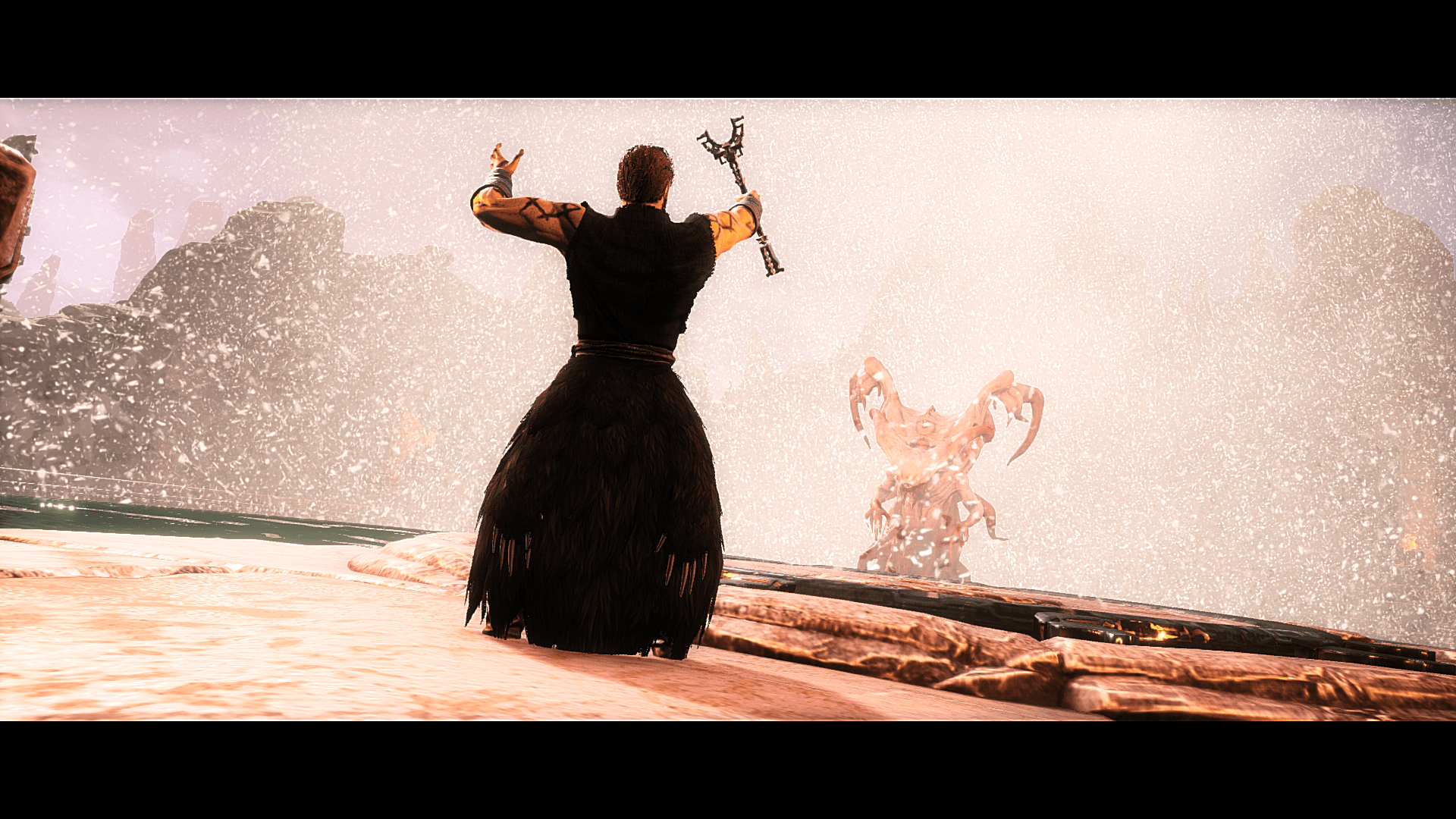
This space awaits an illustration.
Submit a screenshot or artwork from your character’s magical journey, and it may be preserved in a future edition of the Circle’s archives.
The study of Demonology does not begin with demons. It begins with the recognition that the world is not entirely closed. Across the oldest surviving records appear repeated references to places, rituals and moments during which the ordinary boundary separating the mortal world from other realms appears to weaken. Whether these accounts describe the same phenomenon under different names or several distinct conditions remains uncertain, yet they all concern themselves with the same idea: a crossing becomes possible.
The archives have preserved many names for this boundary. Some describe it as a gate. Others call it the veil, the passage or the threshold. The terminology differs between cultures, but the principle remains consistent. Before another being may enter this world, some form of passage must first exist between where it dwells and where it is invited to appear.
✦ The Boundary Between Worlds
The boundary described by Demonology should not be imagined as a physical wall or a distant frontier. No expedition has ever reached it by travelling farther, climbing higher or descending deeper into the earth. Its separation appears to belong to the nature of existence itself rather than to geography. Under ordinary circumstances, the two realms remain entirely apart. Only exceptional conditions permit communication between them.
Whether such conditions arise naturally or must always be created through ritual remains the subject of continued debate. Some records describe ancient sanctuaries where manifestations occurred repeatedly without deliberate intervention. Others insist that no threshold exists until a practitioner prepares one through knowledge, sacrifice or ceremony.
The threshold is not a place that may be found.
It is a condition that must first exist.

◇ The Act of Crossing
Crossing the threshold should never be understood as a one-sided event. Whatever enters another realm leaves its own behind, if only for a moment. Likewise, the place receiving it rarely remains untouched. Numerous accounts describe subtle alterations following repeated summonings: changes in atmosphere, unusual dreams among nearby inhabitants, persistent sensations of unease or the appearance of phenomena for which no ordinary explanation could be offered.
The archives disagree about the permanence of these effects. Some disappear within hours. Others appear to linger across generations, becoming inseparable from the history of the places where they first occurred. Whether such locations attract future manifestations or merely preserve memory of earlier ones remains unknown.
Every crossing alters more than the traveller.
◐ Invitation
Popular accounts often describe Demonology as an art of command. The surviving manuscripts suggest a more cautious understanding. Before authority may ever be claimed, contact must first be established. Every summoning begins not with obedience but with invitation. Whether that invitation is accepted, ignored or exploited depends upon circumstances that no practitioner controls entirely.
For this reason, the opening of a threshold should never be mistaken for mastery over whatever answers it.
Every command begins with permission to be heard.
📖 From the Archive
The Empty Arch
A damaged expedition journal records the discovery of an isolated stone arch standing within the ruins of an otherwise abandoned settlement. During daylight hours nothing unusual was observed. At sunset, however, every horse and hunting dog accompanying the expedition refused to pass beneath it despite repeated encouragement.
No manifestation appeared. No ritual was attempted. The scholars departed before nightfall, leaving only a brief annotation in the margin of the manuscript.
"The gate remained empty.
The animals behaved as though it were not."
✧ Before the Summoning
Those unfamiliar with Demonology often ask what demons are. The archives ask a different question. Before another world may be encountered, the boundary between worlds must first be understood. Every pact, every manifestation and every summoning described in the chapters that follow depends upon that first crossing.
Before the being,
there is the threshold.
✦
CHAPTER II - Beyond the Threshold
CHAPTER II
Beyond the Threshold
The Visitor Is Not Explained by Its Arrival

The opening of a threshold establishes only that contact has become possible. It reveals nothing certain about what may answer. The oldest Demonological records describe visitors of such varied appearance, behaviour and apparent purpose that later scholars have repeatedly failed to arrange them into any dependable order.
Some entities appear only once within the surviving archive. Others return across centuries beneath different names, symbols or forms. Whether these records concern countless separate beings or repeated manifestations of a smaller number of intelligences remains unresolved. For this reason, the Circle preserves names where they are known but places greater value upon conduct, conditions and consequence.
✦ The Other
The beings encountered through Demonology should not be understood merely as strange animals, distant peoples or malformed creatures. Many appear to obey principles unlike those governing mortal life. Some possess no stable shape. Others seem to recognise intention more readily than speech, or respond to names, offerings and symbols whose significance remains obscure to the practitioner.
Difference alone does not establish hostility. Neither does apparent intelligence establish familiar reason. A being capable of negotiation may still understand obligation, suffering, time or identity in ways that bear little resemblance to mortal thought.
What resembles a person may not possess a person's nature.
◇ Manifestation
Descriptions of the same named entity frequently contradict one another. One witness records horns and scaled limbs, another remembers a veiled human form and a third describes only a voice issuing from smoke. Such differences may arise from imperfect observation, deliberate disguise or the possibility that the being possesses no single form independent of the manner in which it enters the world.
The archives therefore distinguish between the entity and its manifestation. What appears during an encounter may be only the shape through which contact became possible, not the complete nature of the intelligence beyond it.
The form is evidence of the encounter.
It is not necessarily evidence of the whole being.

◐ Names and Titles
Names occupy an uncertain place within Demonological study. Some traditions claim that a true name reveals the nature of the being and grants power over it. Others maintain that names are merely signs through which attention may be directed, no more absolute than the titles mortals grant one another.
Several records distinguish between the name by which a visitor answers, the title by which cults remember it and another designation concealed within ritual texts. These may represent separate identities, changing forms or deliberate deception. A name offered freely should therefore be preserved without assuming that it is complete.
A name may open contact.
It does not guarantee understanding.
✧ Purpose
The motives attributed to otherworldly beings are often shaped by mortal expectation. A visitor who requests blood is called hungry. One who demands memory is described as cruel. One who offers knowledge is assumed to value truth. Such conclusions may be convenient, but they are rarely secure.
Some entities appear drawn toward sacrifice, sensation, names, devotion or access to particular places. Others repeat the same demands across generations without any visible benefit. The purpose of an exchange may therefore remain hidden even when its terms appear perfectly clear.
The demand may be understood.
The reason for it may not be.
⟡ Speech and Meaning
Communication across the threshold is rarely simple. Some visitors speak through borrowed voices. Others answer through dreams, wounds, altered flame or changes in the ritual space. Even when ordinary language is used, the meaning of apparently familiar words may differ greatly from mortal understanding.
Agreement is especially uncertain. A being may accept the spoken terms while interpreting silence, gesture or ritual placement as part of the same exchange. The practitioner who records only the words may therefore preserve less of the bargain than they believe.
A shared language does not ensure a shared meaning.
◈ Presence
Not every visitor crosses completely. Some manifestations appear confined to a voice, reflection, shadow or brief alteration of the surroundings. Others act through mortal vessels, objects or places already prepared to receive them. The degree of presence may change during the same encounter, strengthening as the threshold widens or weakening when its conditions begin to fail.
This distinction matters because a limited manifestation should not be mistaken for a powerless being. The archives preserve several encounters in which only a fragment appeared, while the influence behind it remained far greater than the form allowed to cross.
What enters may be only the portion capable of passing through.
📖 From the Archive
The Visitor Without Shadow
A damaged manuscript describes a traveller who entered a desert settlement shortly before dusk. Their reflection appeared normally in water and polished bronze, yet no shadow followed them beneath the evening sun. The visitor traded three questions for a sealed jar of ashes and departed before nightfall.
Later annotations disagree over what had entered the settlement. Some identify a demon known from southern rites. Others argue that the account contains too little evidence to support any name. The jar was never recovered, and the three questions were not preserved.
The encounter remains recorded.
The visitor remains unnamed.
✧ Before the Bargain
The threshold permits encounter, but it does not explain the one who answers. Appearance may deceive, names may conceal and familiar words may carry unfamiliar meanings. The careful practitioner therefore begins no bargain by assuming that the visitor thinks, desires or promises as a mortal would.
Before the pact,
there is the visitor.
✦
CHAPTER III - Bargains and Exchange
CHAPTER III
Bargains and Exchange
Nothing Crosses the Threshold Without a Price

Every surviving tradition of Demonology preserves one observation with remarkable consistency: contact alone rarely produces meaningful exchange. A threshold permits encounter, but it does not compel cooperation. Between the practitioner and the visitor stands another principle upon which the entire discipline depends. Every crossing is sustained by exchange.
The archives record countless forms this exchange may take. Blood, memory, names, years of service, forgotten knowledge, relics, sacrifices and spoken promises all appear throughout the oldest manuscripts. Their variety matters less than the principle they reveal. Few beings cross the threshold without expecting something in return, and few practitioners seek such encounters without believing the price acceptable.
✦ Exchange
Mortals often judge value through wealth, labour or possession. The records preserved by the Circle suggest that visitors beyond the threshold rarely share these priorities. Many appear indifferent to gold while placing extraordinary importance upon names, memories, devotion, suffering or promises whose significance remains obscure to human understanding. Whether these possess genuine value in another realm or merely establish suitable bridges between worlds remains unknown.
For this reason, practitioners are advised to examine not only what is requested, but why they themselves consider the exchange acceptable. A worthless object offered with sincere intent may carry greater consequence than a treasure surrendered without thought.
The worth of an offering belongs first to the one receiving it.

◇ Oaths
Among the oldest forms of exchange are spoken promises. Whether such oaths possess power because of language itself or because they reveal genuine intention remains uncertain, yet nearly every surviving tradition warns against careless speech before an open threshold. Words uttered during ritual frequently continue shaping events long after those who first pronounced them have forgotten their exact meaning.
Several manuscripts distinguish carefully between the promise intended by the practitioner and the promise understood by the one receiving it. Where these differ, the consequences often outlive both participants.
Every oath survives longer than the breath that first carried it.
◐ Desire
Few bargains begin with necessity alone. More often they begin with desire. Knowledge, revenge, love, immortality, power or the hope of escaping grief have drawn practitioners toward thresholds they would otherwise have feared. The archives repeatedly suggest that the greatest danger lies not in the visitor beyond the threshold, but in the longing already carried by the one who opens it.
Desire narrows judgment. The promise of obtaining what has long been denied often persuades the practitioner before a single term has been spoken.
The price is often accepted before it has been named.
✧ Interpretation
Many failed bargains arise not through deception but through understanding. Two participants may speak the same words while attaching entirely different meanings to them. Ritual language, symbolic gesture and silence itself may all become part of the exchange, though neither side recognises this until much later.
The Circle therefore preserves the original wording of agreements whenever possible, resisting the temptation to replace uncertainty with later explanation. Interpretation changes with time. The words themselves do not.
Shared language does not guarantee shared understanding.
⟡ Consequence
No exchange ends when the ritual concludes. The offering alters the one who surrendered it. The promise shapes future choices before it is fulfilled. Knowledge once obtained cannot simply be forgotten because it later proves unwelcome. Every bargain therefore extends beyond the moment of agreement, continuing to influence both worlds long after the threshold has closed.
For this reason, the Circle records consequences beside the original exchange rather than treating them as separate events. The bargain cannot be understood without what followed it.
Every exchange continues after the exchange has ended.
📖 From the Archive
The Empty Bowl
One damaged manuscript recounts a practitioner who prepared every offering prescribed by an older ritual except one. Believing the omission insignificant, they placed an empty bowl upon the altar where another object should have rested. The threshold opened. Nothing appeared. No voice answered. No sign of refusal was ever recorded.
Several generations later a single annotation was added beneath the account.
"The visitor accepted the bargain exactly as it had been offered."
✧ Before the Pact
Every pact begins before the first agreement is spoken. It begins when the practitioner decides that something beyond the threshold is worth approaching at all. Whatever follows remains shaped by that first decision and by the price each side proves willing to accept. To understand Demonology is therefore to understand that no true exchange is ever free, even when the cost remains hidden until long afterwards.
Before the pact,
there is the bargain.
✦
CHAPTER IV - The Limits of Demonology
CHAPTER IV
The Limits of Demonology
Every Threshold Opens Upon Another Will

No surviving manuscript presents Demonology as an exact discipline. Rituals may be performed correctly, offerings prepared with care and every known instruction observed without error, yet the anticipated manifestation may never occur. Equally, incomplete ceremonies have sometimes produced consequences entirely absent from the original texts. The Circle therefore distinguishes between knowledge of a rite and certainty of its outcome.
Unlike many other Schools, Demonology never concerns the practitioner alone. Every threshold joins two realms, each governed by conditions only partly understood. The sorcerer prepares one side of the exchange. Whatever lies beyond prepares the other.
✦ Another Will
Every encounter described within the archives involves another intelligence capable of choosing its own course of action. It may answer immediately, refuse entirely, delay its appearance or respond in ways no practitioner intended. This independence should never be mistaken for failure of the ritual itself. The threshold merely permits contact. It does not compel cooperation.
For this reason, the Circle has never regarded successful summoning as proof of mastery. A visitor that chooses to appear remains no less independent because the invitation was accepted.
A threshold may be opened.
Another will must still choose to cross.
This space awaits an illustration.
Submit a screenshot or artwork from your character’s magical journey, and it may be preserved in a future edition of the Circle’s archives.
◇ Imperfect Knowledge
The oldest Demonological texts survive only as fragments. Entire ceremonies are preserved without explanation, while explanations endure for rituals whose practical details have disappeared. Names remain after the beings they described have been forgotten, and later generations frequently copied earlier manuscripts without understanding the observations that first produced them.
Every practitioner therefore inherits an incomplete tradition. The Circle preserves these fragments because uncertainty honestly recorded possesses greater value than certainty invented to fill empty pages.
The missing page often explains more than the surviving one.
◐ Interpretation
Few encounters explain themselves. Symbols appear whose meaning remains uncertain. A gesture interpreted as acceptance by one practitioner becomes warning in another account. Even where several witnesses observe the same manifestation, agreement concerning its purpose rarely follows.
The Circle therefore preserves descriptions before explanations. Interpretation changes as knowledge grows. Observation, if faithfully recorded, need not.
Meaning follows observation.
It should never replace it.
✧ Control
Popular tales frequently portray Demonology as the domination of infernal beings. The surviving archives offer a quieter conclusion. Agreements may be negotiated. Obligations may be recognised. Conditions may be established. None of these abolishes the independent existence of the one beyond the threshold.
The practitioner who mistakes temporary obedience for permanent mastery soon discovers that another will continues existing long after the ritual has ended.
Agreement should never be mistaken for ownership.
⟡ Consequence
No threshold closes without leaving some trace behind. The practitioner changes through the exchange as surely as the visitor. Knowledge alters judgment. Promises reshape future choices. Places repeatedly opened to other realms often acquire histories inseparable from those encounters, whether or not later generations remember how they first began.
For this reason, the archives record consequences beside every successful exchange. The ritual cannot be understood separately from what followed it.
The first consequence is seldom the last.
📖 From the Archive
The Silent Circle
One manuscript records a summoning performed exactly according to an older ritual. The offerings matched every instruction, the names were spoken without error and the threshold opened exactly as described. Nothing answered.
Many years later another scholar added a brief note beneath the original account.
"The threshold was prepared.
No visitor wished to enter."
✧ The Boundary of Demonology
The limits of Demonology arise not from weakness alone, but from the simple fact that every threshold joins two worlds rather than one. The practitioner may understand their own preparations completely while remaining uncertain of everything waiting beyond them. Such uncertainty does not diminish the discipline. It defines it.
The threshold belongs to both worlds.
Neither world commands it alone.
✦
CHAPTER V - The Illusion of Understanding
CHAPTER V
The Illusion of Understanding
Familiarity Should Never Be Mistaken for Knowledge

Repeated encounters often create the impression that what has been observed has also been understood. The archives preserve no evidence supporting this belief. A practitioner may meet the same visitor many times while learning remarkably little about the world from which it came, the limits of its nature or the reasons behind its actions.
The greatest errors recorded within Demonology rarely begin with ignorance. They begin when familiarity convinces the practitioner that further observation has become unnecessary.
✦ Appearance
A familiar form encourages familiar conclusions. When the same manifestation appears repeatedly, the practitioner often begins assuming that its visible form accurately represents the whole being. The archives repeatedly caution against this mistake. Manifestation is evidence of contact, not necessarily evidence of nature.
Recognition is not the same as understanding.
This space awaits an illustration.
Submit a screenshot or artwork from your character’s magical journey, and it may be preserved in a future edition of the Circle’s archives.
◇ Names
Few assumptions appear more frequently within the archives than the belief that knowing a name is equivalent to knowing the one who bears it. Many traditions preserve several names for what appears to be the same visitor, while others record identical names attached to entirely different manifestations.
Whether these contradictions arise through translation, deliberate concealment or genuine plurality remains uncertain.
A name identifies an encounter.
It does not necessarily reveal an identity.
◐ Intention
Practitioners frequently interpret another being's actions according to human expectation. Generosity, cruelty, gratitude and revenge appear repeatedly throughout later commentaries despite rarely appearing in the earliest observations themselves.
The Circle therefore distinguishes carefully between behaviour and motive. One may often be recorded while the other remains entirely speculative.
Observed action should never be mistaken for known intention.
✧ Success
Repeatedly successful exchanges create confidence. Confidence gradually becomes certainty. Eventually the practitioner begins expecting familiar outcomes simply because earlier encounters unfolded similarly.
The archives preserve numerous examples in which years of apparently predictable exchanges ended without warning because one assumption had quietly remained false from the beginning.
The safest routine often conceals the oldest mistake.
⟡ Projection
Every observer carries their own hopes, fears and expectations into the encounter. These gradually shape interpretation until the practitioner begins recognising themselves within the visitor more readily than the visitor itself.
The Circle therefore regards self-examination as part of Demonological study. To misunderstand one's own expectations is often the first step toward misunderstanding everything beyond the threshold.
The nearest unknown is often the observer.
📖 From the Archive
The Familiar Visitor
One manuscript describes a practitioner who claimed to have dealt with the same visitor for nearly twenty years. Upon reading the earliest surviving account beside the latest, a later archivist observed that the descriptions shared only the name. The appearance, behaviour, demands and manner of speech had all changed.
The practitioner never commented upon the differences.
"Perhaps the visitor changed.
Perhaps only the observer did."
✧ The Last Assumption
The greatest danger preserved within the archives is not the unknown itself, but the belief that the unknown has finally become known. Demonology advances through observation because certainty has repeatedly proven less reliable than careful doubt.
The threshold remains mysterious.
So too does everything beyond it.
✦
CHAPTER VI - Demonological Practices
CHAPTER VI
Demonological Practices
Four Disciplines of Crossing
This space awaits an illustration.
Submit a screenshot or artwork from your character’s magical journey, and it may be preserved in a future edition of the Circle’s archives.
The Circle preserves four principal disciplines within Demonology. Though each approaches the threshold differently, all concern themselves with the same fundamental act: establishing a relationship between the mortal world and that which lies beyond it. Some practitioners seek only contact, others attempt restraint, some pursue cooperation through negotiated exchange, while others erase the boundary altogether by allowing another intelligence to inhabit mortal flesh. These disciplines should not be mistaken for stages of increasing mastery. Each serves a different purpose, demands different preparation and carries consequences unique to its nature.
✦ Demonological Practice I — Summoning
Opening the Threshold
Summoning concerns itself with establishing contact between worlds. Through ritual preparation, offerings and knowledge of the desired entity, the practitioner attempts to attract the attention of an intelligence beyond the mortal realm and create the conditions through which communication or manifestation may become possible. Every successful summoning begins long before the first word is spoken, for preparation determines not only what is called, but also whether the practitioner is capable of recognising what ultimately answers.
The opening of a threshold should never be mistaken for command. A summoned entity remains entirely independent, possessing its own nature, intentions and freedom to respond—or refuse—as it chooses. The archives preserve numerous accounts in which meticulously prepared rituals succeeded only in attracting something other than what had been sought. Such failures rarely arose because the threshold remained closed, but because the practitioner believed that opening it granted authority over whatever crossed.
Every summoning asks to be noticed.
It does not choose who answers.

◇ Demonological Practice II — Binding
Holding What Has Crossed
Binding concerns itself with limitation rather than invitation. Once contact has been established, the practitioner attempts to restrict the freedom of the summoned entity through circles, names, symbols, contracts or other carefully prepared rites. Such bindings may confine, restrain or compel temporary service, yet no prison is flawless. Every ritual possesses limits, every symbol depends upon its proper execution and every omission creates an opportunity that may not become apparent until long after the ceremony has concluded.
The archives repeatedly observe that entities rarely challenge bindings through brute force alone. More often they endure patiently, waiting for carelessness, misunderstanding or the slow erosion of the ritual itself to create an opening. The greatest bindings are therefore remembered not for their complexity, but for their precision. A single overlooked detail has undone prisons that otherwise appeared impossible to escape.
Every prison is tested.
The question is only when.
◐ Demonological Practice III — Pacts and Bargains
Exchange Between Worlds
Not every Demonologist seeks control. Many choose negotiation instead, offering sacrifices, knowledge, service or other exchanges in return for assistance, secrets or power. Such agreements rest upon mutual acceptance rather than force, transforming a chance encounter into an ongoing relationship whose terms bind both parties according to the conditions they have accepted.
The archives repeatedly caution that these bargains are rarely straightforward. Entities beyond the mortal world neither value nor interpret the world as humans do, and the true cost of an agreement may remain hidden until long after it has been fulfilled. The danger lies not only in deception, but in assuming that both sides understand an oath in the same way. A bargain may be honoured perfectly while producing consequences neither participant expected.
A bargain fulfilled
is not always a bargain understood.
This space awaits an illustration.
Submit a screenshot or artwork from your character’s magical journey, and it may be preserved in a future edition of the Circle’s archives.
✧ Demonological Practice IV — Possession
The Shared Vessel
Possession represents the most intimate crossing preserved within Demonology. Through forbidden rites, the practitioner summons and binds a lesser entity into the body of another living being, transforming the host into a vessel occupied by an infernal will. Unlike ordinary summoning, the threshold no longer separates two worlds. Both are forced to exist within the same flesh, each struggling for influence over thought, emotion and action.
The archives describe possession as among the least predictable of Demonological practices. Some hosts resist fiercely, while others gradually surrender themselves to the invading presence. In every case, the boundary between host and visitor becomes increasingly difficult to define, leaving both altered by the encounter. Whether the body ultimately belongs to one will or another, neither emerges unchanged once the threshold has been carried within.
No vessel remains unchanged
after carrying two wills.
⟡ Practices in Combination
Although preserved as distinct disciplines, these practices are seldom isolated from one another. Summoning establishes contact, Binding secures what has crossed, Pacts transform contact into cooperation and Possession dissolves the boundary separating both worlds. Many of the greatest Demonological workings described within the archives combine several of these disciplines into a single rite, each depending upon the others to achieve its intended purpose.
The accomplished Demonologist therefore chooses the discipline appropriate to the relationship they seek rather than attempting to solve every encounter through force, negotiation or confinement alone. Understanding when one practice should yield to another has long been regarded as the true mark of experience.
✧ The Four Crossings
Every Demonologist must ultimately decide what kind of threshold they intend to create. One that merely opens, one that restrains, one that bargains or one that allows another presence to dwell within living flesh. None of these paths exists apart from the others, yet each reveals a different understanding of the relationship between the mortal world and the unknown beyond it.
The Circle preserves these disciplines not because one is superior to the rest, but because together they describe the many ways in which two worlds may briefly become one.
Four disciplines.
One threshold.
Countless consequences.
✦
Epilogue
EPILOGUE
Beyond the Last Threshold
The Unknown Remains Unknown
This space awaits an illustration.
Submit a screenshot or artwork from your character’s magical journey, and it may be preserved in a future edition of the Circle’s archives.
Many disciplines promise certainty through greater study. Demonology offers no such assurance. Every threshold crossed reveals another beyond it, every answer uncovers new questions and every successful encounter reminds the practitioner that the unknown has merely drawn closer, never disappeared. The Circle has therefore never regarded complete understanding as the purpose of this School, for the archives themselves demonstrate that certainty fades while careful observation endures.
The oldest records preserved within the library differ greatly in language, ritual and belief, yet they return repeatedly to the same conclusion. The greatest danger is not that another world exists, nor that its inhabitants may answer when called. The true danger begins when the practitioner mistakes familiarity for mastery and believes that the unknown has finally become known.
✧ Final Reflection
Those who devote themselves to Demonology inevitably spend their lives standing at a boundary few others willingly approach. They learn that not every visitor is hostile, not every bargain is deceitful and not every silence signifies failure. Above all, they discover that every crossing joins two worlds whose laws, desires and understanding can never become entirely one.
For this reason, the Circle preserves these records not as a catalogue of certainties, but as an ever-growing archive of encounters. Each observation, whether triumphant or disastrous, becomes another fragment from which later generations may continue the search. No manuscript closes the subject. No archive contains its end.
The threshold remains.
The unknown endures.
The record continues.
✦