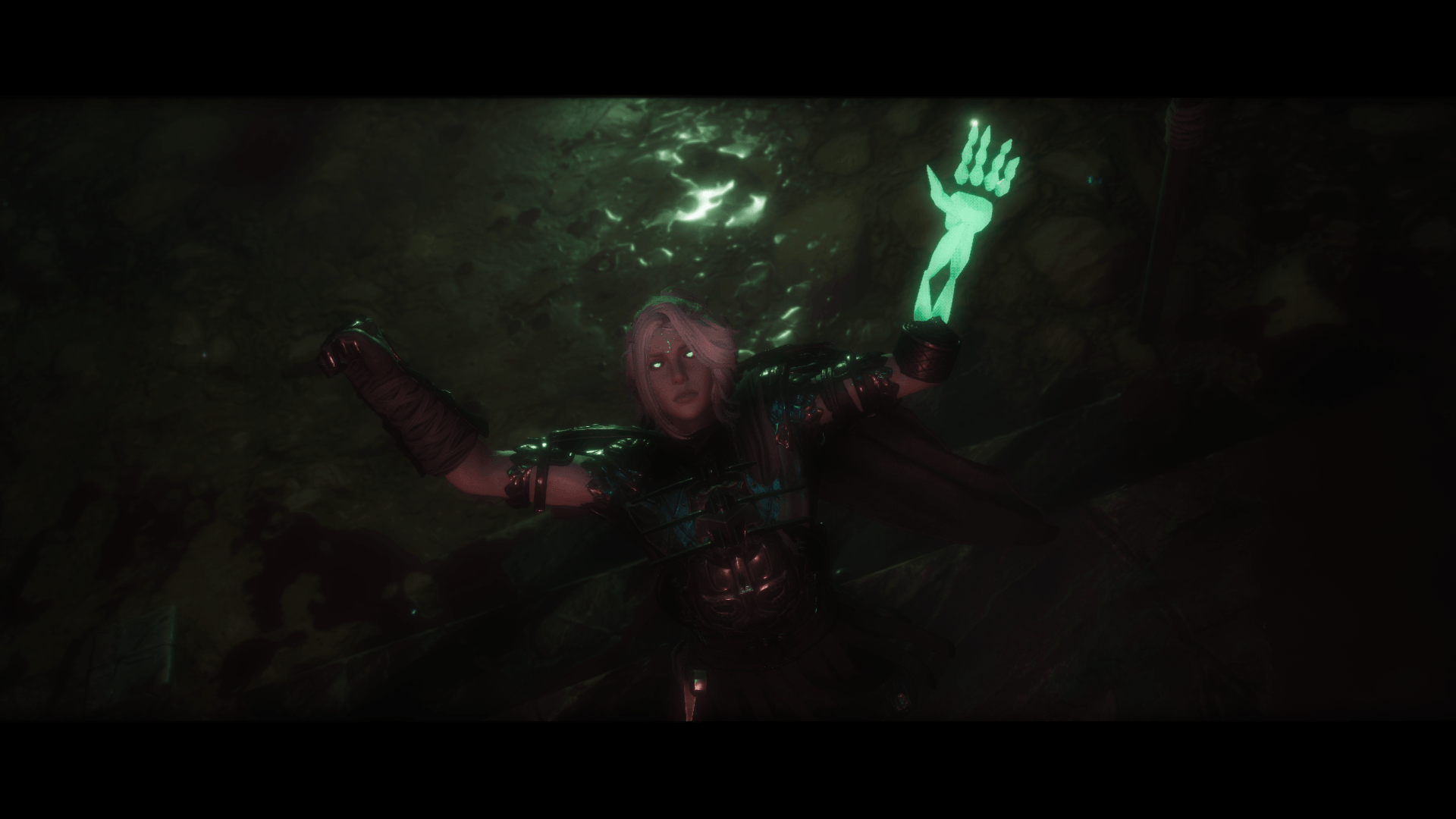
CHAPTER I — The Price of Change
CHAPTER I
The Nature of Corruption
Transformation Beyond Nature

Among the many branches of sorcery, Corruption concerns itself neither with creation nor destruction, but with transformation. Its workings begin with something that already exists: living flesh, disease, decay, magical affliction or the natural processes governing them. Rather than replacing these conditions, Corruption alters them, forcing them beyond the boundaries nature would ordinarily impose.
For this reason, the oldest manuscripts describe Corruption not as a source of new life or new matter, but as the deliberate distortion of what is already present. Flesh may be reshaped, wounds transferred, sickness cultivated or corruption itself carried from one vessel to another. In every case, the practitioner works upon an existing condition rather than creating one from nothing.
✦ Transformation
Transformation lies at the heart of every corruptive discipline. The archives repeatedly distinguish Corruption from acts of simple destruction, observing that the purpose of these rites is rarely to erase or consume. Instead, they alter the nature of the subject itself, changing its form, condition or behaviour while leaving something recognisably connected to what existed before.
Some transformations strengthen. Others deform. Many accomplish both at once. The surviving records preserve these outcomes without suggesting that change necessarily follows a single direction, for the same rite may produce remarkably different results depending upon the vessel that receives it.
Corruption rarely replaces.
It transforms.
This space awaits an illustration.
Submit a screenshot or artwork from your character’s magical journey, and it may be preserved in a future edition of the Circle’s archives.
◇ Distortion
Natural processes proceed according to their own measure. Wounds heal, flesh grows, disease spreads and bodies decay. Corruption does not abolish these processes, but forces them beyond their ordinary course. Healing may occur by transferring injury to another. Decay may be hastened or delayed. Flesh may grow into forms no natural life would produce. Disease may be cultivated until it exceeds its original character.
The archives therefore describe Corruption as the study of unnatural change rather than supernatural creation. What emerges remains rooted in something that existed before, however altered it may later become.
Nothing begins from nothing.
◐ Burden
Many corruptive rites share another characteristic: they relocate rather than eliminate. A wound removed from one body appears upon another. Disease cleansed from a victim survives elsewhere. Corruption drawn from one vessel settles into the next. The surviving manuscripts repeatedly describe such workings as acts of transfer, reminding later readers that the altered condition rarely disappears merely because it has changed its bearer.
This principle appears throughout the oldest records, regardless of the specific practice employed. Corruption changes where a burden resides more readily than whether it exists at all.
A burden moved
remains a burden.
📖 From the Archive
The Withered Orchard
One weathered account describes an orchard where every diseased tree gradually recovered over the course of a single season. The harvest that followed proved unusually abundant, and the local villagers recorded the event as a miracle. Only years later did travellers discover an abandoned grove several miles away where every tree had blackened, twisted and died within that same year, bearing signs of the very blight that had vanished from the first orchard.
The manuscript preserves both accounts together without proposing an explanation.
"The sickness departed.
Whether it truly ended was another matter."
✧ The First Alteration
The surviving archives consistently portray Corruption as the study of alteration rather than creation. Every practice begins with an existing condition and compels it toward a state nature would not have reached unaided. Whether that alteration appears beneficial, destructive or somewhere between depends less upon the rite itself than upon the condition from which it began and the price demanded by its transformation.
Throughout the centuries, one observation appears with remarkable consistency: Corruption never acts alone. It requires something already present, and from that beginning it creates something that, while recognisable, can never again be called entirely natural.
Nothing remains unchanged.
That is where Corruption begins.
✦
CHAPTER II - Flesh, Blight and Burden
CHAPTER II
Flesh, Blight and Burden
The Many Forms of Unnatural Change
This space awaits an illustration.
Submit a screenshot or artwork from your character’s magical journey, and it may be preserved in a future edition of the Circle’s archives.
The oldest manuscripts rarely describe corruption as a single condition. Instead, they record many different forms through which unnatural change manifests itself. Flesh may alter, disease may spread beyond its natural course, corruption itself may settle within a living being and even the ordinary processes of growth, healing or decay may be forced into unfamiliar patterns. Though these transformations appear very different from one another, the archives preserve them as expressions of the same underlying principle: existing things altered beyond their natural state.
For this reason, the Circle distinguishes not between greater and lesser forms of corruption, but between the different vessels through which it acts. Flesh, sickness and corruption itself each obey different principles, requiring different methods while remaining subject to the same fundamental process of transformation.
✦ Flesh
Living flesh possesses a remarkable capacity for change. It heals, grows, weakens and adapts throughout the course of a lifetime. Corruptive practices exploit this natural flexibility, forcing the body to accept alterations it would never ordinarily produce. Such transformations may strengthen one part while weakening another, preserve damaged tissue, reshape anatomy or redirect injury from one vessel into the next.
The archives consistently portray flesh as both resilient and vulnerable. It accepts change more readily than stone or metal, yet each alteration leaves traces that cannot always be removed by simply restoring its former appearance.
The body remembers
every change forced upon it.
This space awaits an illustration.
Submit a screenshot or artwork from your character’s magical journey, and it may be preserved in a future edition of the Circle’s archives.
◇ Blight
Disease appears throughout the archives not merely as illness, but as a living process capable of growth, adaptation and transmission. Corruption neither invents sickness nor conjures it from emptiness. Instead, it cultivates what already exists, awakening dormant spores, nurturing hidden infections or magnifying afflictions beyond the limits nature would ordinarily permit.
The same principle allows certain traditions to suppress or draw illness away from the afflicted, though the surviving records consistently note that such corruption rarely disappears altogether. More often it changes its form, its strength or the vessel that bears it.
Blight spreads.
It seldom vanishes.
◐ Burden
Among the more unusual observations preserved within the Circle is the tendency for corruption itself to behave almost as though it were something that could be carried. Numerous accounts describe sorcerers absorbing afflictions from another, containing dangerous influences within themselves or deliberately transferring unnatural conditions between living beings. Whether corruption should be understood as substance, force or condition remains uncertain, yet the archives repeatedly describe it as something capable of changing its bearer.
This principle appears throughout the School, linking practices that otherwise seem unrelated. A wound may change bodies, a disease may change host and corruption itself may pass from one vessel to another while never truly ceasing to exist.
The burden changes hands.
The burden remains.
✧ Natural Process
Perhaps the defining characteristic of Corruption is that it does not replace nature, but compels it to exceed its ordinary course. Flesh still heals, though unnaturally. Disease still spreads, though with unnatural intensity. Decay still progresses, though hastened or delayed according to the will of the practitioner. Even beneficial transformations recorded within the archives remain recognisable extensions of processes that already existed before corruption intervened.
For this reason, the School concerns itself less with inventing new conditions than with redirecting existing ones until they no longer resemble their natural beginnings.
Nature continues.
Corruption changes its course.
📖 From the Archive
The White Stag
A hunting journal recovered from the Border Kingdoms describes a stag whose antlers had grown into impossible branching forms unlike any known to local hunters. Despite its grotesque appearance, the animal remained vigorous and apparently healthy. Later entries record similar changes spreading gradually through the surrounding forest, affecting neither every creature nor every generation alike.
The final note preserved beside the account contains only a brief observation.
"The forest still lived.
It had simply become something else."
✧ The Mutable World
The surviving archives portray corruption not as a force acting upon a single subject, but as a principle capable of altering many different aspects of the natural world. Flesh, disease, decay and corruption itself become intertwined through practices that transfer, reshape or intensify what already exists. Though the vessels differ, the underlying process remains remarkably consistent throughout the oldest records.
To study Corruption is therefore to study transformation wherever it appears, recognising that unnatural change may touch body, illness, burden or even the ordinary workings of nature itself without ceasing to remain recognisably connected to its origin.
Many forms.
One transformation.
✦
CHAPTER III - The Work of Alteration
CHAPTER III
The Work of Alteration
Changing What Already Exists

Unlike disciplines that seek hidden knowledge, commune with the dead or establish contact with other realms, Corruption works upon conditions that already exist. Flesh, disease, wounds and magical afflictions become the material through which its rites are performed. Every surviving tradition preserved within the Circle begins with an existing state and alters it, compelling nature to follow a course it would not ordinarily take.
For this reason, the oldest manuscripts describe Corruption less as an art of creation than as an art of direction. The practitioner does not invent new principles, but redirects existing ones, accelerating, suppressing, transferring or reshaping them until they assume forms no natural process would have produced unaided.
✦ Transfer
Many corruptive workings operate by changing the bearer rather than the condition itself. A wound passes from one body into another, disease leaves one host only to settle within the next and magical corruption may be drawn away from one vessel while taking root in another. The alteration lies not in removing the burden, but in determining where it will reside.
This principle appears throughout the archives with remarkable consistency. Conditions change hands far more readily than they cease to exist, making transfer one of the defining characteristics of the School.
The burden travels.
Its nature remains.
This space awaits an illustration.
Submit a screenshot or artwork from your character’s magical journey, and it may be preserved in a future edition of the Circle’s archives.
◇ Reshaping
Not every alteration concerns movement alone. Flesh may be encouraged to grow where it should not, bones may lengthen or twist, organs may adapt to unnatural demands and familiar anatomy may gradually assume unfamiliar forms. Such transformations do not introduce entirely foreign matter, but compel living tissue to develop according to principles outside its natural course.
The archives consistently distinguish reshaping from replacement. However dramatic the result may appear, the transformed body remains recognisably connected to what it once was.
The form changes.
Its origin remains.
◐ Amplification
Many natural processes proceed slowly. Wounds close over days, disease spreads through ordinary contact and decay follows the patient rhythm of time. Corruption frequently concerns itself with disturbing this balance, hastening what was gradual or preserving what should have faded. Such workings rarely invent new conditions, instead magnifying those already present until they exceed ordinary expectation.
The same principle explains why the archives preserve accounts of both miraculous recoveries and devastating plagues within the same discipline. In each case, an existing process has merely been driven beyond its natural measure.
Nature continues.
Only its pace has changed.
✧ Stability
The oldest records repeatedly observe that unnatural change rarely settles into perfect balance. Altered flesh may continue changing long after the original rite has ended, diseases may evolve beyond their intended course and burdens transferred from one bearer to another seldom remain entirely dormant. Every act of corruption introduces instability whose consequences may emerge gradually rather than immediately.
For this reason, many manuscripts continue recording altered subjects long after the initial transformation, recognising that the corruption itself often remains unfinished.
Transformation ends.
Change continues.
📖 From the Archive
The Unhealed Scar
A fragmentary account tells of a sorcerer who repeatedly drew grievous wounds from injured soldiers onto their own body. Each patient recovered completely, while the sorcerer survived every ritual despite accumulating countless scars. Years later, witnesses claimed the oldest wounds had begun to shift across the body without fresh injury, joining together into unfamiliar patterns no physician could explain.
The final note preserved beneath the account contains only a single sentence.
"The wounds had changed their owner.
They had not forgotten themselves."
✧ The Nature of Alteration
The surviving archives consistently portray Corruption as a discipline of redirection rather than creation. Every working begins with something already present and compels it toward a condition nature alone would not have reached. Flesh, disease, wounds and magical afflictions all become subjects of the same principle, differing only in the manner by which they are altered.
The School therefore concerns itself not with bringing new things into existence, but with determining what existing things may become once their ordinary limits have been abandoned.
Nothing new is made.
Everything becomes something else.
✦
CHAPTER IV - The Limits of Corruption
CHAPTER IV
The Limits of Corruption
No Alteration Exists Alone

Every corruptive working begins with a judgement. Before flesh is reshaped, sickness cultivated or a burden transferred, the practitioner first decides that the existing condition may be improved. The archives preserve countless transformations founded upon such judgements, yet no surviving record presents an alteration as universally superior. What serves one purpose may hinder another, what thrives in one environment may fail in the next, and what appears perfected to one observer may seem profoundly flawed to another.
The limits of Corruption arise from this absence of objective perfection. A transformation may succeed exactly as intended and still produce weaknesses, dependencies or consequences beyond its original purpose. The altered subject does not exist apart from its body, surroundings or relationships, and any change imposed upon one part inevitably requires the rest to adjust around it.
✦ Perfection
The archives rarely disagree about whether a transformation occurred. They disagree about whether it should be called an improvement. One manuscript may praise an altered body for its strength, endurance or resistance, while another condemns the same form for its rigidity, hunger or diminished sensation. Neither account disputes the result. Their disagreement lies in the purpose by which that result is judged.
No surviving record preserves a definition of perfection accepted across every culture, environment or circumstance. Corruption may shape a subject toward a chosen ideal, but that ideal belongs to the one who imagined it and to the conditions under which it was conceived.
Perfection has many definitions.
None remain uncontested.

◇ Adaptation
Every altered body remains subject to the conditions in which it must live. Flesh thickened against blades may lose flexibility and sensation. Enlarged lungs may improve endurance while placing greater strain upon the heart. Limbs reshaped for climbing may prove cumbersome upon open ground, while eyes adapted to darkness may suffer beneath the sun. The improvement is real, yet so too are the limitations created alongside it.
For this reason, many corruptive transformations are better understood as specialisations rather than perfect forms. They exchange one weakness for another according to the environment, purpose or danger for which the subject was altered. When those circumstances change, the value of the transformation changes with them.
Every adaptation
chooses its weakness.
◐ Interdependence
No part of a living body functions alone. A stronger limb demands support from bone, muscle and heart. A larger organ requires additional nourishment. Hardened skin alters movement, touch and the body's ability to regulate heat. Even a transformation confined to one visible feature may gradually change the behaviour and condition of the entire organism.
The same principle extends beyond the body. A creature adapted to consume more food changes the land that sustains it. A plague altered within one host may spread through a settlement, livestock or crops. Corruption transferred from one vessel reshapes the life of whoever receives it. The archives therefore record consequences not only within the altered subject, but throughout the web of relationships surrounding it.
One alteration.
Many consequences.
✧ Circumstance
An alteration judged useful in one place may become dangerous or burdensome elsewhere. A body shaped for cold may fail beneath desert heat. Resistance to one disease may leave the subject vulnerable to another. A mutation suited to war may hinder ordinary labour, while a form designed for survival in isolation may struggle within crowded settlements. Corruption does not produce value independent of circumstance; it produces a body fitted to a particular expectation.
As circumstances change, the same transformation may pass from advantage to limitation without altering at all. The body remains what it was made to be. The world around it has simply changed the meaning of that design.
A strength in one world
may become a weakness in the next.
⟡ The Endless Work
Every improvement reveals another imperfection. A strengthened body exposes the weakness of the heart sustaining it. A cured affliction reveals another vulnerability. A successful mutation creates new requirements that invite further alteration. The more closely a subject approaches one ideal, the more clearly its failings become visible from another perspective.
The archives preserve few examples of Corruption treated as a finished work. Most transformations lead to later revisions, corrections or attempts at refinement, each responding to limitations created by the previous change. Perfection recedes because the standard by which it is judged changes alongside the thing being altered.
Every perfection
becomes tomorrow's imperfection.
📖 From the Archive
The Beast of Two Valleys
A fragmented account describes a mountain predator altered by an unnamed sorcerer to survive the bitter winters of a northern valley. Its body grew broad and heavy, its lungs deepened and a dense layer of flesh protected it from cold and injury. Within that valley it hunted with extraordinary success, enduring storms that killed every other beast of its kind.
Years later the creature followed migrating prey into the warmer lands beyond the mountains. There its great weight exhausted its heart, its heavy flesh trapped the heat and the lungs that had once preserved it became another burden upon an already strained body. The final record notes that nothing about the transformation had failed. The creature had merely left the world for which it had been perfected.
"It was without equal in the place for which it had been made.
Outside it, every gift became a flaw."
✧ The Measure of Improvement
The surviving archives portray Corruption as an art capable of remarkable precision, yet incapable of producing a form that remains perfect for every observer, environment or purpose. Each alteration embodies a particular judgement concerning what ought to be stronger, faster, healthier or more useful. That judgement may prove successful within its intended circumstances while creating consequences elsewhere in the body, the surrounding world or the future life of the altered subject.
The limit of Corruption is therefore not that change cannot be achieved. It is that no change can account for every relationship it disturbs, every circumstance it may encounter or every mind that will later judge its result. The work may be completed exactly as imagined and still remain unfinished in the eyes of the next practitioner.
Corruption may perfect a purpose.
It cannot perfect the world.
✦
CHAPTER V - The Illusion of Improvement
CHAPTER V
The Illusion of Improvement
Every Alteration Reveals the Hand That Made It

Every corruptive working begins with an act of interpretation. Before a body is reshaped, a sickness intensified or a burden transferred, the practitioner must decide which quality should be preserved, which should be altered and which may be sacrificed. The resulting transformation therefore reveals more than the condition of its subject. It also preserves the priorities, fears and desires of the hand responsible for making it.
The archives contain many alterations that succeeded precisely as intended while later appearing incomprehensible to another observer. A body fashioned for endurance may reveal a practitioner who feared frailty. Flesh hardened against injury may reflect a life shaped by violence. A mutation designed to conceal emotion may suggest that the sorcerer regarded expression itself as weakness. Corruption does not merely alter what already exists; it gives physical form to an idea of what ought to exist instead.
✦ The Judging Hand
No alteration begins from neutrality. The practitioner approaches the subject carrying their own understanding of strength, beauty, usefulness, health and survival, and these beliefs determine which qualities are treated as flaws. The archives repeatedly demonstrate that two sorcerers presented with the same body rarely imagine the same improvement. One may strengthen the limbs, another sharpen the senses, while a third may regard both as distractions from endurance or obedience.
The transformation thus becomes a record of judgement. Even where no written explanation survives, the altered form often reveals what its maker valued and what they were willing to diminish in pursuit of it.
Every alteration answers a question.
The question belongs to the one who asked it.
This space awaits an illustration.
Submit a screenshot or artwork from your character’s magical journey, and it may be preserved in a future edition of the Circle’s archives.
◇ Fear
Many transformations preserved within the archives appear to have been shaped less by ambition than by fear. A practitioner who has witnessed disease may become preoccupied with resistance. One who has known helplessness may pursue strength beyond all other qualities. Another who fears dependence may alter the body until it no longer requires comfort, rest or companionship in familiar forms.
These workings are not necessarily unsuccessful. Some produce bodies remarkably suited to the dangers their makers anticipated. Yet the archives repeatedly observe that protection against one feared condition may narrow the subject’s capacity to live beyond it, leaving the altered form permanently shaped by a danger that may never return.
The body may outlive the danger.
The fear remains within its design.
◐ Desire
Other alterations arise from longing rather than fear. Strength, beauty, endurance, fertility, obedience, freedom from pain or release from mortality have all appeared within the ambitions of corruptive practitioners. Such desires often seem simple until the transformation reveals how narrowly they were understood. A body made beautiful according to one ideal may become alien to another, while flesh altered to endure pain may also lose the sensations through which pleasure, warning and intimacy were once recognised.
The archives preserve these contradictions without claiming that desire itself invalidates the work. They record instead how every desired quality carries assumptions about what may be discarded in order to obtain it.
The desired form
reveals the desired world.
✧ Control
Corruption often attracts those unwilling to accept the body, the environment or circumstance as fixed. Where another observer sees limitation, the corruptor sees material awaiting revision. This disposition may produce extraordinary innovation, yet the archives repeatedly note that the urge to alter rarely ends when the first transformation succeeds. Once one flaw has been corrected, another becomes visible, and once one condition has been brought under control, the uncontrolled remainder grows more difficult to ignore.
In this manner, the work gradually shifts from improving the subject to eliminating every quality the practitioner did not choose. The altered form becomes increasingly precise, yet also increasingly dependent upon the judgement of the one who designed it.
Control begins with correction.
It rarely ends there.
⟡ The Altered Self
The clearest evidence of a corruptor’s philosophy is often found within their own body. Practitioners who reshape themselves repeatedly leave behind a record more intimate than any manuscript, each scar, adaptation and unnatural feature preserving a decision concerning what they once considered insufficient. Over time, the distinction between self-preservation and self-revision may become difficult to maintain, particularly where every successful alteration reveals another possibility.
Later scholars have frequently examined such bodies as living texts. The changes disclose not only what the practitioner became, but what they feared becoming, what they hoped to escape and what version of themselves they considered worth preserving.
The altered body is also a confession.
📖 From the Archive
The Five Bodies of Sarath
A series of anatomical drawings attributed to the corruptor Sarath depicts five successive attempts to improve the same living subject. The first body was strengthened for labour, the second lightened for speed and the third hardened against injury. The fourth combined all three designs but required constant nourishment and suffered frequent collapse. The fifth abandoned strength and speed entirely, retaining only the resistance to harm that Sarath had come to value above every other quality.
A later commentator observed that the final design revealed less about the subject than about the years in which Sarath had created it. During that period, the corruptor had survived an assassination attempt, lost the use of one arm and refused all visitors except armed attendants.
“The fifth body was not perfect.
It was merely the body Sarath no longer feared to inhabit.”
✧ Beyond Improvement
The surviving archives preserve no alteration free from the perspective of its maker. Every improvement reflects a particular understanding of strength, survival, beauty, usefulness or freedom, and every design reveals what the practitioner believed could be sacrificed in pursuit of that ideal. Another corruptor may study the same result and immediately perceive flaws invisible to the first, not because the transformation failed, but because the judgement guiding it has changed.
Corruption therefore leaves two records behind. One is written upon the altered subject. The other is written through it, revealing the mind that looked upon what existed and decided it should become something else.
Every transformation is a portrait.
The subject is not always the one being changed.
✦
CHAPTER VI - Corruptive Practices
CHAPTER VI
Corruptive Practices
Four Disciplines of Unnatural Change
This space awaits an illustration.
Submit a screenshot or artwork from your character’s magical journey, and it may be preserved in a future edition of the Circle’s archives.
The archives preserve four principal disciplines within Corruption. Though their methods differ greatly, each begins from the same principle: something already exists and is deliberately altered beyond the course nature would ordinarily permit. Flesh may be reshaped, wounds transferred, disease cultivated or magical corruption itself carried between living beings. None of these workings creates something from nothing. Each transforms what is already present.
The practices should not be regarded as isolated techniques, but as different expressions of the same philosophy. Every corruptive working reflects a judgement concerning what should change, what should remain and what consequences are acceptable in pursuit of that transformation.
✦ Corruptive Practice I — Flesh Command
The Transfer of Wounds
Flesh Command alters injury rather than erasing it. Through corruptive rites, wounds are drawn from one living body and accepted by another, allowing the patient to recover while the practitioner assumes the burden upon their own flesh. The injury survives the ritual; only its bearer changes. Preparatory rites, occult protections and the sorcerer's own altered body may lessen the severity of the transferred wounds, but they do not abolish them.
The archives consistently describe Flesh Command as one of the clearest demonstrations of corruptive philosophy. Healing is achieved not through restoration, but through redistribution. Every recovered patient therefore leaves behind another body marked by the same suffering, reminding later practitioners that Corruption rarely destroys a burden. It merely determines where that burden shall remain.
The wound is not undone.
It is given another body.
This space awaits an illustration.
Submit a screenshot or artwork from your character’s magical journey, and it may be preserved in a future edition of the Circle’s archives.
◇ Corruptive Practice II — Mutation
The Reshaping of Living Flesh
Mutation concerns the deliberate restructuring of living anatomy through corruptive influence. Flesh, bone and organ are compelled to develop according to principles beyond their natural course, producing permanent alterations that may strengthen, deform or fundamentally redefine the body. The resulting form remains recognisably connected to its original vessel, yet no longer follows the pattern nature first intended.
The archives preserve remarkable diversity among these transformations. Some favour strength, others endurance, resilience or entirely unfamiliar adaptations. None appears universally superior. Every mutation reflects the priorities of its creator and the circumstances for which it was designed, revealing as much about the corruptor's judgement as about the body they altered.
Every new form
remembers the old one.
◐ Corruptive Practice III — Blightcraft
The Cultivation of Decay
Blightcraft concerns the cultivation, alteration and transmission of sickness. Disease is not conjured from emptiness, but awakened from dormant spores, extracted from infected hosts or patiently cultivated until it may be directed according to the practitioner's purpose. Once prepared, these afflictions may be magnified beyond their ordinary course, spreading through flesh, crops, livestock or entire communities.
The same understanding allows disease to be diminished or drawn away from the afflicted, though the archives repeatedly distinguish removal from destruction. Whether intensified or cleansed, the blight itself remains subject to the same principle governing every corruptive discipline: it changes form, strength or bearer rather than simply disappearing from the world.
Blight is cultivated.
It is never born from nothing.
This space awaits an illustration.
Submit a screenshot or artwork from your character’s magical journey, and it may be preserved in a future edition of the Circle’s archives.
✧ Corruptive Practice IV — Burden Bearing
The Transfer of Corruption
Burden Bearing concerns the movement of magical corruption itself. Through this practice, the practitioner absorbs, contains or redistributes unnatural corruption from one living being into another, including themselves. The rite neither destroys nor purifies the corruption. Instead, it changes where that corruption resides, preserving its existence while altering its influence upon the world.
Many surviving records describe practitioners who willingly accepted burdens that would otherwise have consumed another, gradually reshaping themselves through repeated acts of containment. Others employed the same discipline to place corruption elsewhere, exchanging one vessel for another according to necessity or design. In every case, the corruption endured. Only its bearer changed.
A burden carried
remains a burden.
⟡ Practices in Combination
Though preserved as separate disciplines, corruptive workings frequently combine them. Flesh Command may transfer wounds before Mutation reshapes the body that bears them. Blightcraft may cultivate an affliction later absorbed through Burden Bearing. Likewise, corruption carried within one vessel may alter flesh over time, producing mutations that become inseparable from the burden itself.
The archives therefore treat these practices as interconnected rather than independent. Each concerns a different expression of the same underlying principle: the deliberate redirection of existing conditions into forms nature would not have reached alone.
✧ Four Expressions of Change
The four disciplines preserved within Corruption describe different ways of altering the world without creating anything new. Flesh Command transfers suffering. Mutation reshapes living form. Blightcraft cultivates decay, while Burden Bearing changes the vessel through which corruption itself is carried. Though their methods differ, each reflects the same understanding: every transformation begins with something that already exists and leaves behind consequences extending far beyond the moment of the rite.
Together they reveal Corruption not as the pursuit of destruction, but as the pursuit of deliberate alteration. The result may be judged beneficial or monstrous according to the eye that beholds it, yet every working ultimately reveals the same truth: the transformation says as much about the one who desired it as about the thing that was changed.
Four disciplines.
One transformation.
Countless consequences.
✦
Epilogue
EPILOGUE
Beyond Perfection
Every Change Creates Another World
This space awaits an illustration.
Submit a screenshot or artwork from your character’s magical journey, and it may be preserved in a future edition of the Circle’s archives.
Among all the disciplines preserved within the Circle, Corruption concerns itself most directly with possibility. Every practice begins by questioning whether something might become stronger, healthier, more resilient or better suited to its purpose. In this respect, corruption is neither uniquely cruel nor uniquely compassionate. It simply refuses to accept that the world must remain exactly as it is.
Yet the surviving archives also preserve another observation with remarkable consistency. Every improvement reflects the perspective of the one who imagined it. A body perfected for one purpose becomes unsuited to another. A cure achieved through transfer leaves suffering elsewhere. A disease cultivated for war reshapes the land long after the conflict has ended. Every alteration reaches beyond the subject first chosen, changing bodies, communities and environments in ways no practitioner completely foresees.
✧ Final Reflection
The oldest manuscripts rarely condemn Corruption, nor do they celebrate it. Instead, they preserve transformation as faithfully as they preserve every consequence that followed. Some altered forms endured for generations, becoming ordinary within the worlds they reshaped. Others vanished quickly, remembered only as failed attempts to perfect what had never required perfection in the first place. Neither outcome appears exceptional within the archives. Both belong to the same discipline.
For this reason, the Circle preserves corruptive works not merely as records of altered flesh or cultivated blight, but as records of the minds that imagined such changes necessary. Every transformation reveals a philosophy, every mutation a judgement and every burden transferred an answer to a question that another practitioner might have asked differently. Long after the flesh has decayed and the corruption itself has faded, those judgements remain preserved within the altered world they left behind.
Every transformation changes two things.
The world...
and the one who wished to improve it.
✦